
I had coffee with a former colleague the other day. It was supposed to be a quick catch-up. But before our drinks even hit the table, she was venting.
“There’s a problem on my team,” she said.
“One employee was accused of bullying another.”
This wasn’t the first time, either. The same person had a history of questionable behavior: intimidation, passive-aggressive comments, undercutting others in meetings. And apparently, nothing had ever been done about it.
When I asked what she had done since the recent incident, she shrugged and admitted:
“Honestly, I haven’t addressed it yet. It’s been about two weeks.”
I looked her dead in the eye and said something I’ve said many times before:
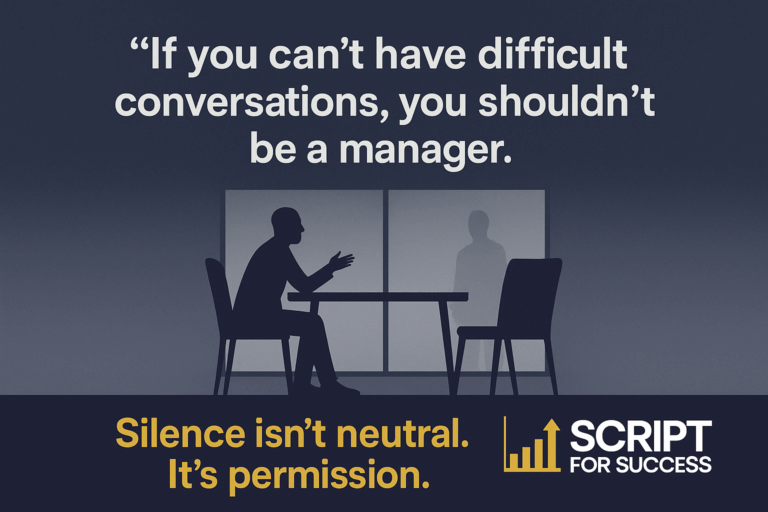
“If you can’t have difficult conversations, you shouldn’t be a manager.”
Let’s be clear: Silence is not neutral.
It’s permission.
When leaders don’t address toxic behavior, they send a clear message to the rest of the team:
- That bullying is tolerable.
- That bad behavior gets a pass if you’re good at your job.
- That reporting concerns goes nowhere.
- That it’s safer to stay quiet than to speak up.
And while I empathize with how hard those conversations can be, being uncomfortable is not an excuse for being absent.
The Leadership Litmus Test
Management isn’t just about spreadsheets and strategy. It’s about people. And sometimes, that means saying:
- “That behavior is not acceptable.”
- “We need to talk about what happened.”
- “You’ve crossed a line, and here’s how we’re going to address it.”
Avoiding conflict doesn’t make you a peacemaker. It makes you an enabler.
This Is Why I Wrote Script for Success
When I wrote Script for Success: Turn Tough Talks into Career Wins, I wasn’t creating a theory book, I was building a toolbox.
It includes:
- Real-world scripts
- Step-by-step conversation guides
- The confidence to speak up and lead through conflict
We don’t lose good employees to bad pay. We lose them to bad management and inaction.
Let This Be Your Wake-Up Call
If you’re in a leadership role and you’ve been avoiding a conversation like this, ask yourself:
“What message am I sending by doing nothing?”
You don’t need perfect words. You need the courage to begin.
Ready to lead better conversations?
One conversation at a time. That’s how change happens.