
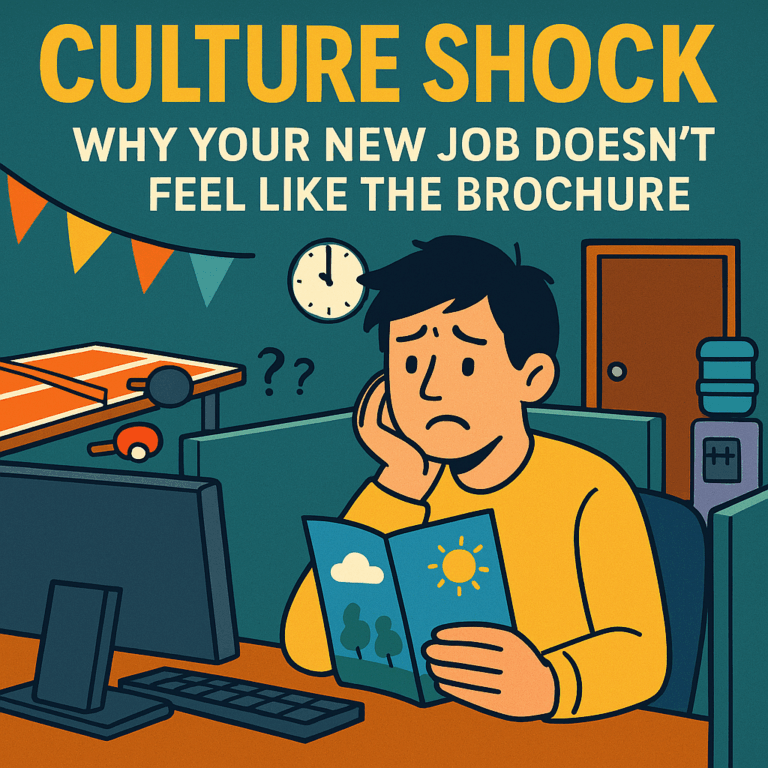
You were promised collaboration. Flexibility. A fun, supportive culture.
And instead? You got mystery meetings, chaotic onboarding, and Sharon from Accounting passive-aggressively guarding the coffee machine.
Welcome to the real world of work—aka the bait-and-switch experience no one warned you about.
- The Hiring Process is a Highlight Reel
Think of the interview like a first date: everyone’s on their best behavior. They tell you how innovative the company is. They name-drop buzzwords like “collaboration,” “growth,” and “culture of belonging.”
And then you show up, and everyone’s too busy to train you, half the team’s on PTO, and your desk chair tilts aggressively to the left.
Reality Check: You weren’t lied to, but you also weren’t given the full picture. Culture lives in the day-to-day, not in the job posting.
- No One Tells You the Unwritten Rules
Here’s the part that slaps the hardest: most of what makes or breaks your success has nothing to do with your actual job description.
- How do people actually communicate here?
- Can you speak up in meetings—or will that get you labeled “too much”?
- Who’s the real decision-maker (hint: it’s not always the org chart)?
Welcome to the hidden curriculum of the workplace. And you only learn it by observing, asking, and sometimes awkwardly stumbling through trial and error.
- The “Cool” Culture May Be Just… Juice Boxes on Fridays
Some companies mistake perks for culture. Free snacks, ping-pong tables, Zoom happy hours—cute, but not culture.
Culture is how people treat each other under pressure. It’s how your manager reacts when you make a mistake. It’s whether women support other women—or undercut them.
If the culture feels off, you’re not being negative. You’re being observant.
- So What Can You Actually Do?
- Write down your expectations. What were you hoping this job would feel like?
- Document the reality. What’s actually happening?
- Find one small way to advocate. Ask for clearer onboarding. Set a boundary. Request feedback early.
- Talk to a trusted mentor. Sometimes it’s not the wrong company—it’s just a rocky beginning.
Final Thoughts
Starting a new job is rarely seamless, and it’s okay to feel disoriented. The goal isn’t to find perfect. It’s to find a space where you can learn, grow, and be respected.
And if you realize this job isn’t it? That’s not failure—that’s clarity.